
George Santayana was both right and wrong about the importance of learning from history, and Francis Fukuyama was wrong about the end of history. That’s especially true with respect to the decision of the US and Israel to bomb Iran and kill much of its top leadership.
Call it realpolitik, pragmatism, realism, or moral relativism, but what happened decades and even centuries before in Iran and the larger Middle East no longer matters, for the dice have been rolled and the war is fait accompli.
For example:
It doesn’t matter that Great Britain, the United States and the Soviet Union began meddling in Iranian affairs during World War II, in the pursuit of oil.
It doesn’t matter that Iran was coerced into oil concessions that would generate more revenue for foreign nations than for Iran itself, especially through the Anglo-Persian Oil Co., which became the main conduit for oil and money that flowed to the West.
It doesn’t matter that, fed up with the above, Iran nationalized its oil industry in 1951 under the leadership of Iranian Prime Minister Mossaddegh, over strong objections by Britain and the US.
It doesn’t matter that in 1953, the CIA and Britain’s M16 orchestrated a military coup d’état against Mosaddegh, who was sentenced to three years in prison and then kept under house arrest until his death in 1967.
It doesn’t matter that Mohammad Reza Pahlavi, the Shah of Iran, was hated by many Iranians, who saw him as a puppet of the US, as corrupt and out-of-touch with the common man, and as being bullheaded in his hurry to Westernize the nation and, in their minds, go against a thousand years of Persian culture and Muslim doctrine.
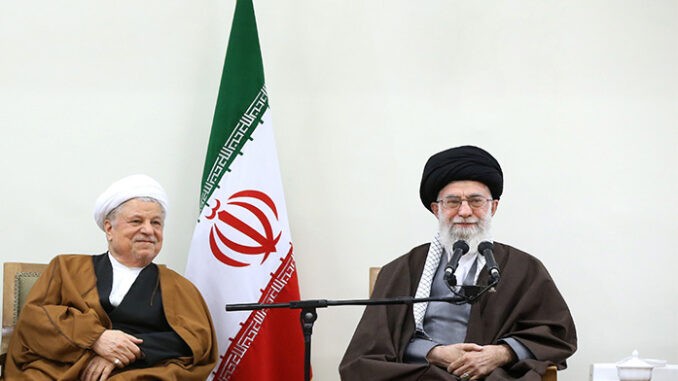
It doesn’t matter that all of the above planted the seeds of the 1979 Iranian Revolution and the coming to power of Ayatollah Ruhollah Khomeini and his repressive Medieval theocracy.
It doesn’t matter that, with the support of the US, and with modern weapons from America and France, Iraqi dictator Saddam Hussein, a Sunni Muslim, attacked Shia Iran in 1980, leading to an eight-year war and 500,000 deaths on both sides. (Of course, that’s the same autocrat that the US went to war against and cheered when he was hanged.)
It doesn’t matter that during the war with Iraq, Iran couldn’t get parts for its aging weapons, due to a US embargo, thus necessitating that teenage Iranians be sent into battle to save the homeland.
It doesn’t matter why the US became Israel’s staunchest ally in 1948 and has remained in that role, even as the alliance triggered the enmity of many Muslims, got the US embroiled in costly Middle Eastern conflicts and intrigues, and caused dissension at home.
It doesn’t matter when and why Zionism came about and led to the establishment of Israel, the displacement of Palestinians, and, more recently, the destruction of Gaza.
It doesn’t matter when and why Hezbollah, the PLO and Hamas came about and led to perpetual war against Israel, including, more recently, the Oct. 7, 2023 attack on southern Israel by Hamas.
It doesn’t matter who is right or wrong, or good or evil, or justified or unjustified, or victim or victimizer.
It doesn’t matter that a volatile mix of oil and religion is the root problem in the Middle East and everything else is background noise.
What matters here and now, especially to the US and Israel, is that Iran is a threat to Israel and to US interests in the Middle East, especially if Iran is close to producing nuclear weapons. A backward look to explain how we got to this point is irrelevant, except for historians, history buffs like myself, moral philosophers, just-war theorists, and demonstrators at US colleges.
History is very relevant, however, in going forward and making decisions about what to do next in Iran. Here are some lessons from history:
The Limits of Bombing: According to some estimates, the US dropped more bombs on North Vietnam during the Vietnam War than all of the tonnage dropped on Germany in World War II, but the bombing failed to collapse the North Vietnamese regime.
The Danger of a Ground War: In World War I, the British Navy failed to take control of the critical Turkish Straits, or the Dardanelles, at Constantinople, even though the British navy at the time was unrivaled and far superior to the navy of Turkey (Ottoman Empire), which had joined the Triple Alliance Powers against the Entente Powers. Britain resorted to an amphibious landing on the Gallipoli peninsula in April 1915. It withdrew eight months later after each side incurred approximately 250,000 casualties.
First Lord of the Admiralty Winston Churchill was justifiably blamed for the fiasco.
The Achilles Heel of Empire: Of course, empires have come and gone throughout history, but the downfall of the British Empire is perhaps most relevant to today. It took one war, the First World War, to seriously wound it; and it took a second war, the Second World War, to inflict the coup de grace only 22 years later. Its far-flung empire had become too costly in treasure and British lives to maintain and defend, including, ironically, its colonies and outposts in the Middle East.
Hegemonies tend to produce resentment among distant native populations. The British Empire’s economic hegemony tended to flow from its military hegemony. America’s military hegemony tended to flow from its economic hegemony. Today, America’s hegemony enables it to impose sanctions on enemies and to impose tariffs on allies and enemies alike, thus causing mistrust and fractures within alliances, as well as causing alliances to shift in a multipolar world.
Unpredictable Flashpoints: China’s rise, Putin’s invasion of Ukraine, Trump’s dismantling of the post-WWII order, and ongoing and new conflicts in the Middle East have left geopolitics in an unsettled condition and increased the odds of a spark somewhere setting off a world war.
Once again, World War I is illustrative of what can happen when the world is in disorder. Prior to the war, Europe was the center of a mind-boggling number of complex alliances, of aging empires trying to protect themselves from encroachments and a loss of prestige and power, and of a high degree of mistrust between nations.
The spark that set off this geopolitical kindling was the assassination of Archduke Franz Ferdinand, heir to the Habsburg throne, in Sarajevo in June 1914. The assassin was a Bosnian Serb nationalist, and the Balkans at the time were a hotbed of revolutionary movements and ethnic hatreds, operating within artificial borders established by outside powers. In other words, it resembled the Middle East after the fall of the Ottoman Empire.
By August 12, most of the major powers had declared war on each other, either in compliance with alliances are in contravention of them. Over 9 million combatants would be killed in the war. The war would lead to the Bolshevik revolution in Russia and the tens of millions who died in creating a Soviet workers’ paradise, would lead to the fall of the Ottoman Empire and to France and Britain carving up the Middle East, would lead to the mass deaths of World War II and the Holocaust, which in turn would lead to a renewed Zionist movement and the establishment of Israel.
The Failure of Nation Building: It has become conventional wisdom that America’s attempts at nation building, regime change and democratization in the Middle East and North Africa have been a failure. Many of those who were in full support of the attempts have now conveniently forgotten their former advocacy. Still, it’s helpful to mention four of the failures.
Afghanistan: Twenty years of war in Afghanistan began with the Taliban in control and ended with the Taliban in control.
Iraq: The conquering of Iraq and the deposing of Saddam Hussein unleashed ISIS, split off the Kurds, removed a strategic counterbalance to Iran, and resulted in approximately 4,500 American service members killed and 32,000 wounded.
Libya: The killing of Libyan dictator Muammar Gaddafi destabilized the country, led to tribal conflicts, and paved the way in the Sahel for radical Islamists.
Egypt: American support for the Muslim Brotherhood and the Arab Spring resulted in the 2013 coup d’etat, when the Egyptian army chief General Abdel Fattah el-Sisi led a coalition to remove President of Egypt Mohamed Morsi from power and suspended the Egyptian constitution.
There are many other examples of what can be learned from history going forward in Iran. You might have favorites of your own.
Incidentally, one of the most insightful and prophetic books on the Greater Middle East is The Loom of Time, by Robert D. Kaplan, paperback edition, 2023, Random House. Kaplan makes a compelling case that the ideals of democratic governance are often in conflict with the need for stability and can lead to anarchy. Sometimes, the best option in the Middle East and elsewhere is a benign form of autocracy.
In conclusion, it’s difficult to see how the Middle East will ever be at peace or how the US will ever extricate itself from the land where empires go to die.
Mr. Cantoni can be reached at [email protected].
Be the first to comment