
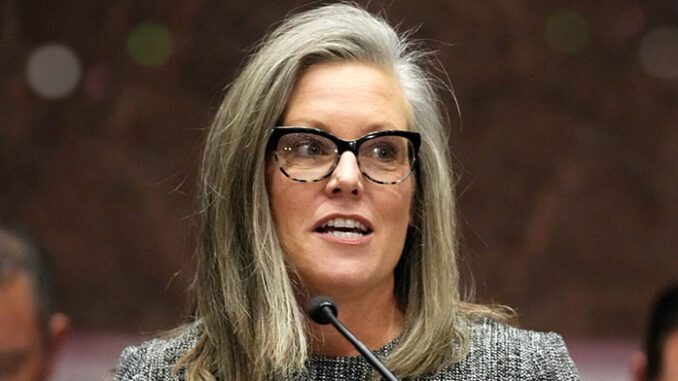
Governor Katie Hobbs is being accused of breaking a long-standing tradition for vetoing the Charlie Kirk Loop 202 bill. Critics say the governor injected partisanship into a process that has never been political.
“Governor Hobbs didn’t just veto a bill. She broke with a long-standing Arizona tradition
of recognizing impact over politics,” said Arizona Senate President Warren Petersen. “Charlie Kirk inspired millions of Americans to engage in their communities, speak freely, and exercise their First Amendment rights. He built something that reached far beyond Arizona, and he brought that energy right here to our state. That kind of influence matters. Arizona has never required political agreement to recognize someone’s contribution to public life. We’ve recognized impact, service, and people who’ve shaped conversations and encouraged others to participate.”
“This veto makes it clear that standard has changed. It tells people that recognition now depends on political alignment, not contribution,” claims Petersen. “That’s not how Arizona has ever approached these decisions, and it’s a disappointing shift for our state.”
SB 1010 would have formally designated the Loop 202 as the Charlie Kirk Loop 202 and would have required the designation to be reflected in official state records, documentation, and roadway signage.
The loop spans approximately 77 miles across the Phoenix metropolitan area, connecting to Interstate 10 on both ends and serving as a major transportation corridor for millions of Arizonans each year. The legislation directed the Arizona Department of Transportation to install appropriate signage, did not supersede existing designations, and carried no anticipated fiscal impact to the state’s General Fund.
Before this veto, Arizona had a clear precedent for honoring individuals regardless of political affiliation. Congressman Ed Pastor, a Democrat, has a major freeway named in his honor, and it was recognized as a tribute to his service and contributions to this state.
Hobbs’ veto, according too Petersen, “marks a clear departure from Arizona’s longstanding
tradition of recognizing impact over politics.”
Be the first to comment