
Somewhere north of the Grand Canyon and south of the Arizona-Utah border lies Fredonia, a small town known as the gateway to the North Rim. Coined in the 19th century to mean “land of freedom,” Fredonia for decades was also home to a longtime high school basketball record holder.
That was until January, when George McCormick’s record was shattered.
McCormick scored 75 points in a basketball game in 1966 while playing at Fredonia High School. He held the Arizona high school record for the most points scored in a single game until Adrian Stubbs of Maryvale High School crushed it in just three quarters on Jan. 13. Stubbs scored 100 points before he was benched heading into the fourth quarter.
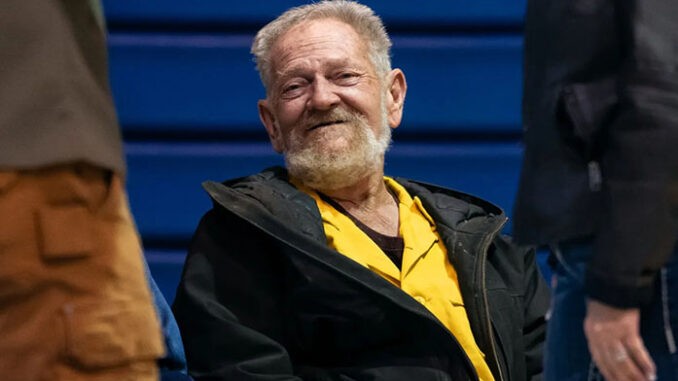
But McCormick is more than just his recently surpassed high school record. He’s a revered coach and passionate proponent of his beloved homeland. The record, long faded in McCormick’s memory, was merely one facet of a life well lived.
“Well, I’m glad somebody broke it.” McCormick, 77, said about Stubb’s record-breaking performance. “Finally, monkey’s off my back, it’s on yours now.”
The day after Stubbs scored 100 points, he was celebrated. Fellow classmates at Maryvale in Phoenix’s West Valley took videos and photos of him and he was covered by national outlets such as ESPN. When Stubbs got hot during the game against Kofa High School, his coach, Jeremy Smith, decided to go for a record-breaking performance.
Sixty years ago, the sentiment was slightly different. When McCormick got hot against 1A Salome High School, his coach just wanted to see how much he could score, McCormick said. They were never going for a record.
“We didn’t know we’d done anything special, you know. We didn’t know what the records were. We were just playing another game,” McCormick said. “So I really didn’t realize it until we got back to school Monday, and it was in the papers.”
And even then, he tried to keep his head down, never boasting about his achievement. Some athletes live off their glory years, regaling all who will listen with the details, growing more animated about their feats as the years fade.
Not McCormick. He kept that same humble mentality all his life while residing mostly in Fredonia, where he grew up and then raised his children while coaching the Fredonia High School girls and boys basketball teams.
A tight community
Fredonia is a small town off State Route 89A in northern Arizona. With a population of roughly 1,000, it is significantly smaller than its northern counterpart, Kanab, Utah, which has a population of just under 5,000. Fredonia has a close-knit community that George and his wife, Rhea McCormick, wouldn’t trade for anything. The McCormicks are prominent members of the town, having raised their five kids in the community. McCormick began coaching the high school basketball teams after injuring his ankle while playing basketball at Eastern Arizona College in Thatcher, in southeastern Arizona.
Despite the McCormicks’ fierce loyalty to the town, Fredonia is shrinking, and they’re concerned. Only half the school is being used as more and more people opt to live in Kanab for access to the bigger school, the McCormicks said.
“It’s actually kind of a grieving process to watch the school dwindle, because it’s all you ever known,” said Jennifer McCormick Ohman, George’s daughter. “There’s not a whole lot here to have a lot of pride in right now, just because there’s not enough students. I mean, you have to have numbers to have a team.”
While Ohman grew up in Fredonia, she, too, played for the school, where she was coached by her father, so the shrinking town and school affect her more than most.
Basketball runs in the family. It’s in their genes. McCormick and his brothers grew up playing every chance they could, and McCormick’s kids would go on to do the same.
“Basketball was just part of our world,” Ohman said. “My dad played and held records. I had an uncle, his brother, that played professional basketball in Switzerland, and all of (George’s) kids played it. It was just kind of our world.”
But despite growing up in a world of basketball, McCormick’s record was rarely mentioned, and never by the holder himself, Ohman said. He never regaled his family with an account of that one game so long ago.
“And you would think, we’re at such a small town that it would have been, you know, something that was known, and he just didn’t ever really talk about it,” she said.
Even in his coaching days, Ohman said her father never mentioned that night to his team.
McCormick made the switch to coaching after an ankle injury during his time at Eastern Arizona College. He said he faced the fact that he couldn’t play anymore and finished his degree at Northern Arizona University in Flagstaff. Then, he returned home with his wife and their three kids at the time to coach.
Coaching was more special to McCormick than any moment of glory he experienced 60 years ago. He never dwelled on his 75-point performance, and he didn’t have time to dwell on his injury either, he said.
As a coach, McCormick was in it to win. He didn’t play favorites – not for his own kids and not for his old teammates’ kids, whom he coached. McCormick knew he couldn’t make everyone happy, and that was OK with him.
With McCormick at the helm from the mid-1980s through the 2000s, the Fredonia boys’ team won one state championship, and the girls’ team won five.
But as numbers on the players’ rosters dwindled and Fredonia’s business climate suffered in part because of the closing of Kaibab Forest Products, the community’s major industry, McCormick’s desire to lead started to dissipate.
“I hated to see the way it was going to (see) these businesses shut down, and I could see that it was just going to gradually go down the hill,” he said. “So I just made a decision that it was time for me to get out of coaching.”
The McCormicks aren’t the only ones who are saddened by the town’s downsizing. His high school teammates and lifetime friends say they feel the same way.
Bob Lathim and Richard Lewis grew up with McCormick, playing alongside him on that record-setting night, and, although they both no longer live in Fredonia, they hold the city close to their heart.
“And it’s kind of sad to see,” Lathim said. “It used to be quite a booming school.”
Lathim left Fredonia eight years ago for his health, but said he’ll be moving back soon.
Lewis also moved away and has lived in St. George, Utah, for 45 years now. For him, Fredonia isn’t the same.
“And so the town itself is not anywhere near as vibrant today as it was back then,” Lewis said.
But despite the damp mood surrounding the well-being of Fredonia and its school, Rhea, McCormick’s wife, said they’re happy right where they are. They’ve been in the same house for 48 years, the same one-story ranch-style home in which they raised their kids. Portraits of grandkids and great-grandkids line the mantle of their home. They still have livestock and land to care for.
“I love Freedonia. It’s been just fine. I haven’t wanted to go someplace else,” Rhea said. “We all care about each other and the ones who don’t care don’t matter anyway. I just think it’s a good place to live.”
Fredonia’s size is part of its charm for the McCormicks. It creates a tight-knit community unlike those of large metropolitan areas.
“We’re well bonded,” McCormick said.
A memorable night
And that bond plays out on the court. At least it did the night McCormick set a record that wouldn’t be touched for another 60 years.
“I was close to them already, because we grew up together,” McCormick said about his teammates. “Our dads grew up together. We run together. We were just like one person, we’re real close. It’s self-satisfying, if you can help each other out.”
McCormick’s teammates weren’t jealous when he coolly dropped 75 points in that 104-32 win over Salome long ago; they were supportive. Lewis recalled having an open shot and taking it, only to miss. He quickly realized that if he was going to play that night, he was going to feed McCormick the ball.
McCormick said his teammates would tease him and call him a ball hog. Sixty years later, Lathim and Lewis were still poking fun at McCormick, calling him the very same name under the fluorescent lights of the Fredonia High gym.
While the gym they once played in has since been torn down and rebuilt, the memories hold strong, and so does McCormick’s hope for the future of the town he calls home.
Despite the grief many feel at Fredonia’s current status, McCormick is hopeful it will return to its previous glory.
“We have a little bit of problems here too,” said McCormick, ever the optimist. “But basically we’re a pretty sound town.”