
Sigh! Another disappointment in my search for the bread of my youth.
The disappointment was a bakery franchise called Breadsmith that recently opened a store near my house in the Foothills of Tucson. The bread is made at a combination bakery and store in Oro Valley that is owned by the same franchisee.
Judging by prices, the Wisconsin-based chain has confused Tucson with the Hamptons or Martha’s Vineyard.
With high hopes, I paid $6.90 for a baguette, or about twice the price of a baguette at the Tucson-based Beyond Bread. My hopes were dashed. It wasn’t any better than the baguettes at Beyond Bread, even though the ones at Beyond Bread get demerits for being sourdough, having too thick of a crust, and being too dense inside.
Beyond Bread’s other breads are very good, though, especially its focaccia. The same for its sandwiches and pies.
The cinnamon roll that my wife bought at Breadsmith cost $6.45, or more than twice the price of the delicious cinnamon rolls at the Village Bake House in Oro Valley.
I don’t remember what I paid for a baguette in France, which is the gold standard in bread. But my son and daughter-in-law were there more recently and paid one euro for a baguette. The low price was due somewhat to the subsidies that bakeries get from the French government.
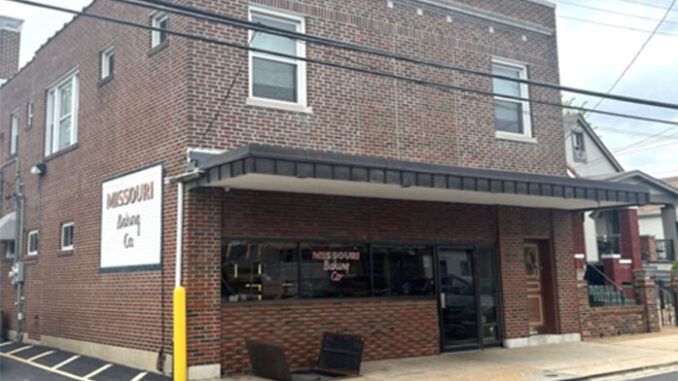
My bread standards were developed when my dad would take me with him to buy bread (and pastries and cookies) from the Missouri Baking Company in the Italian section of St. Louis, or what was known as Dago Hill, a name usually spoken with affection but sometimes as an ethnic slur.
Missouri Baking looked like a bakery should. It didn’t have the hip and pretentious décor of many of today’s mediocre places. Nor was it in a strip mall or owned by a faceless corporation in another state. The owners lived in the flat on top of the bakery. Whenever my dad took me there, he was greeted by name, because he grew up in the neighborhood with the owners.
Typically, a baker was behind the counter wearing an apron covered with flour—like the scene in the movie “Moonstruck,” when Cher goes to a bakery in Brooklyn and meets a baker played by Nicolas Cage, who is sweaty and covered with flour.
Baseball notables Yogi Berra and Joe Garagiola grew up down the street from Missouri Baking. Also nearby was an Italian deli that made its own salami and sold other lunchmeats and a variety of cheeses. Dad would stop there after going to the bakery.
On the drive home in our rusty Dodge clunker, my mouth would water from the aromas wafting from bags full of fresh bread, Italian cookies, salami, prosciutto, mortadella, and gorgonzola cheese, which was so ripe that it oozed. I couldn’t wait to get home and have a feast.
The bakery would probably be a disappointment today. More than likely, later generations of the founders moved to the suburbs, went to college, lost interest in getting up at three o’clock to start baking, and sold the business.
By contrast, their immigrant forebears thought nothing of laboring without air-conditioning next to hot ovens in the summer heat and humidity of St. Louis. Many others on the Hill labored in the nearby clay mines and brick kilns. My immigrant fraternal grandfather worked as a coalminer in Southern Illinois upon immigrating and subsequently moved to St. Louis. All were thankful to have escaped the poverty and lack of opportunity in the old country.
The descendants of those immigrants now have comforts and safety nets that were unimaginable back then. Yet they yearn for the glories of socialism as they sip six-dollar lattes at Starbucks and peck on their thousand-dollar iPhones while wearing expensive jeans that come new with rips in them.
Meanwhile, like many corporations, Breadsmith touts on its website how it gives back to the community. No doubt, today’s wannabe socialists fall for the platitude, even though they have expensive college degrees and should know better.
Funny thing, but the shopworn slogan “give back to the community” wasn’t heard on the Hill of yesteryear. Why? First, it was a real community, not a faux one—a community of shared values. Second, mutual support was so ingrained in the culture that no one thought it was out of the ordinary to help neighbors or felt a need to brag about it. Third, daily life was built around social, fraternal, cultural, and athletic organizations, especially the neighborhood church and parish school. Fourth, there was so much civic pride and neighborliness in the community that homeowners and shopkeepers would keep their humble properties in impeccable condition and even sweep the street in front and the alley in back.
Come to think of it, I’m looking for much more than good bread—something that neither Breadsmith nor any other chain can provide. I’m looking for a real community.
Mr. Cantoni is an author, freelance writer and a retired business executive. Contact: [email protected].
Be the first to comment