In the spring of 2020, when classrooms closed and students shifted to Zoom, everything about education changed. My oldest daughter was in kindergarten at a district school. Up until that point, we had enjoyed what felt like a strong and hopeful beginning. Her teacher was kind and attentive, the sort of educator who makes a child feel seen and supported. I volunteered as the room mom and quickly connected with many of the families in her class. The community felt warm, encouraging, and deeply invested in helping children succeed.
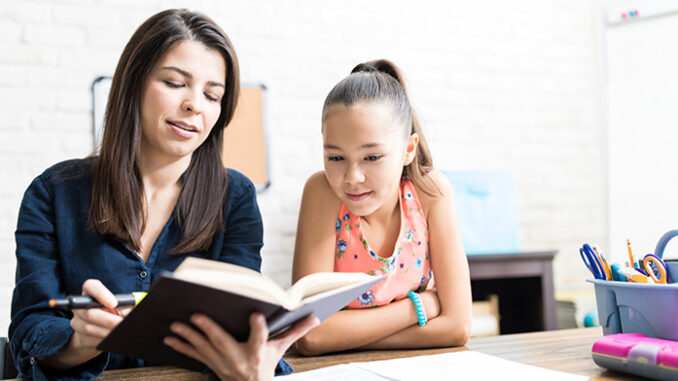
Then the screen replaced the classroom, and everything we depended on for stability and growth suddenly disappeared. It became clear within days that virtual learning was not going to work for my then-six-year-old. She struggled to sit in front of a computer, lost interest easily, and seemed completely disengaged by the new format. The lively curiosity she had in the classroom faded when it met a pixelated row of faces and an unfamiliar routine. After expressing my concerns to a friend, she suggested that I try the homeschool curriculum her family used. I decided to explore the option. By the end of the school year, I was teaching my daughter myself. What began as a temporary solution slowly revealed itself as something more meaningful. It sparked a passion for teaching and a deeper understanding of my child that I never expected to discover.
Teaching my daughter firsthand exposed gaps in her knowledge that I had not previously noticed. It also helped me understand a fundamental truth that often gets lost in broader debates about education. There is no single model of teaching or learning that works for every student. According to the latest Nation’s Report Card, only 26% of fourth grade students in Arizona are reading proficiently. This is not just a statistic. It is a call for urgency. It shows that many children are not getting what they need from traditional systems. Every student has unique strengths and challenges and every family has different circumstances. Education must reflect that diversity. I learned that teaching is not simply about following a curriculum. It is about recognizing how a child learns, what excites them, what discourages them, and what environment allows them to grow.
The experience also reshaped the way I view the role of parents in education. Being present each day allowed me to observe what worked and what did not. I could adjust lessons to her pace, introduce topics when she was ready, and nurture her curiosity instead of suppressing it. I realized that parents are not just supporters standing on the sidelines. They are essential partners. When parents are empowered and equipped to participate fully in their child’s learning, students benefit in countless ways. Parental involvement is not an optional add on. It is a critical ingredient in a child’s academic and personal success.
The lessons I learned from the pandemic point to a simple but powerful conclusion. Education must be flexible, adaptive, and deeply responsive to the needs of each student. Families deserve the freedom to choose the environment that will help their children succeed. Schools should be encouraged to innovate, explore new approaches, and collaborate with families rather than operate apart from them.
COVID-19 disrupted our schools, but it also opened a door to reimagining what education can be. If we embrace flexibility, expand options for families, and strengthen the partnership between parents and educators, we can build an education system that truly serves all children. Our students deserve nothing less.
Marta Mac Ban was born and raised in Phoenix, AZ. She grew up attending K-12 schools in PVUSD then went to ASU, obtaining a Bachelor’s Degree in Mass Communication & Spanish. After working in journalism for Telemundo, Marta moved to California where she worked in the TV and music industries. After relocating back to Arizona with her family in 2017, Marta began getting involved in school choice and education when her daughters entered school. Marta joined a local school choice nonprofit, launched a hybrid school, and became part of a microschool network. She is now an education entrepreneur and works to develop and promote school choice and options, with a priority being a solid educational foundation for all students through programs and tutoring. She currently resides in Cave Creek Arizona with her husband and two daughters.
I commend the author for her dedication to the education of her children. It’s wonderful that she has the luxury of working with only two students. I wish she would have acknowledged that public school teachers would love to be able to dedicate so much time and resources to such a small, select group of students. Comparing this level of individual tutoring to the limitations, constraints and demands placed on public school teachers is unrealistic and grossly unfair to teachers.
Thank you, @oldprof49, for reading this article and for your feedback. Public school teachers are also commendable and highly valued. I completely understand the restraints and challenges they face. The main idea of this post was not to compare individual tutoring to a classroom setting in a traditional school. It was to highlight that we can find innovative and thoughtful ways to support both teachers and students, namely by encouraging parents to strengthen their relationship and role within education. In the past, parents and teachers worked together, but we now have a cultural mindset to offload everything on to teachers, which is not fair or realistic. Secondly, we as a community, can work to support smaller class sizes or change approaches, goals, and expectations to benefit students and teachers. There are many layers to this and there is no simple or quick answer but I hope this can spark meaningful conversations and change toward positive educational outcomes for all.