
A recent article in Governing magazine praised Somerville, Mass. for not having any traffic deaths for three years and implied that its safety measures would work just as well anywhere.
Tucson is at the other end of the spectrum. Consumer Affairs reported in August 2025 that the Old Pueblo ranks fifth in the nation for dangerous driving, as reflected in its high rate of fatal crashes due to speeding. It also ranks near the top in pedestrians being fatally struck by vehicles.
Somerville’s safety measures include lowered speed limits, additional speed humps, refurbished sidewalks, an expanded bike-lane network, new bus stops and bus lanes, increased ticketing for distracted driving, and repainted and shortened crosswalks to reduce the amount of time pedestrians are in the roadway.
Tucson has adopted some of these traffic calming methods and is planning to adopt more. Will these be as effective as they are in Somerville?
To answer the question, let’s compare the two cities on important metrics and demographics.
Somerville is a Boston suburb just north of Cambridge. It is only 4.1 square miles and has a population of 82,144. This gives the town a population density of 20,035 people per sq. mile. By contrast, the city of Tucson is 242 sq. miles and has a population of 548,371, for a population density of 2,266 people per sq. mile. (The Tucson metro area has a population of nearly 1.1 million.)
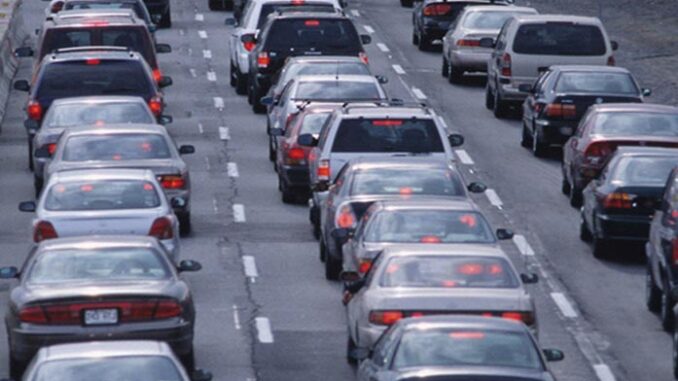
Because the leafy Massachusetts town is so much smaller than Tucson, vehicle speeds and speed limits don’t have to be high to get across town quickly. It also helps that Somerville’s higher population density results in more traffic congestion and thus lower speeds, which in turn results in fewer fatal accidents.
Moreover, Somerville is an old town that was developed in the horse-and-buggy days and thus has many streets that were designed for . . . well, for horses and buggies. As such, they are narrow and have low speed limits. For example, Cameron Ave., a main thoroughfare in town, has a speed limit of 25 mph. (For trips to Boston and surrounding towns, Somerville residents have the option of an interstate highway or a commuter rail line.)
Given that Tucson doesn’t have a crosstown freeway, it would be unbearable for drivers, as well as detrimental to commerce, to have to cross the sprawling city or the larger metro area at 25 mph on arterial streets. That’s why most arteries are six lanes wide (four thru lanes plus two turn lanes), with posted speed limits ranging from 35 to 45 mph.
Somerville has a median household income of $142,553, which is 2.4 times more than the estimated $60,000 in the city of Tucson. Upper-income Asians and Whites make up 80% of Somerville’s population, and 73.8% of adults have a bachelor’s degree or higher, versus 31.1% of adults with a bachelor’s or higher in the city of Tucson.
Why are these statistics relevant? Because they suggest that Somerville has more money than Tucson to spend on road improvements and that its residents have more political clout in getting their demands met.
The statistics also suggest that Somerville has fewer deranged, impaired and homeless people wandering the streets and stepping in front of cars. No doubt, Somerville’s long, cold and wet winters are also a factor in keeping the number of street people low.
So, to repeat my earlier question: Will Somerville’s traffic safety measures be as effective in Tucson?
Not a chance!
This doesn’t mean that city leaders and transportation planners should stop trying to reduce traffic fatalities. But it does mean that they should be honest about Tucson’s realities and not adopt costly safety measures just because they are trendy.
Besides, the world will soon be disrupted by technology in mostly unpredictable ways. One change is certain: As self-driving cars are perfected, and as car-sharing takes hold, traffic patterns will change and driving will become safer.
Tucson might even be as safe as Somerville someday.
Mr. Cantoni is an author, activist and retired business executive living in Tucson. Contact: [email protected].
I’ve never understood why anyone would make the logical fallacy of comparing the results of dissimilar environments, conditions, and parameters. I agree that Tucson drivers are absurdly reckless, but I don’t think new signs are the answer.
It seems to me there should be a merciless law enforcement present at _high-risk_ locations until the word gets out to slow-the-f-down. I am not above impounding or confiscating vehicles for repeat gross offenders, either.
Methews and the Methanys will stumble their way into streets are long as they remain unmolested; but that is a conversation for another day. As for the listless pajama’d mouth breathers than amble their way across busy thoroughfares, maybe it is only physics that can change their ill-conceived exo-crossing expeditionary choices.
Lower speed limits are the problem. The same road that’s 35 in Arizona in 45 in California. Surface streets there routinely are set a 50MPH, look at houghton. The speed limit being set at 45 is more of a problem than people driving 55-60 on it. All over the city has lowered speed limits while most of the driving public disregard because it’s too damn low. Go move to Massachusetts and ride your e-bike. Everywhere I go is 20 miles from my house I’m not driving 35-40
Craig if you’re so dissatisfied with Tucson you may want to consider living elsewhere.
I agree Howard. I’ve been telling him that for years.
Actually, I rather appreciate Mr. Cantoni’s opinion on matters, even if I don’t always agree with the premise or solution. One can say, “well, just move,” but “fight for your home” is also a valid argument – is that not what most here would tell illegals fleeing their own homes?