
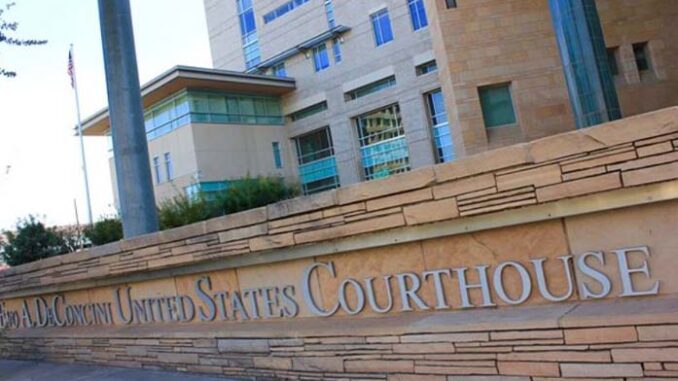
TUCSON – A New York man who helped launder nearly $1 million for an international fraud network that targeted elderly victims across the country, including Arizona, has been sentenced to more than 10 years in federal prison.
Ivan Wilbur Seales, 58, a citizen of Saint Vincent and the Grenadines and resident of New York, was sentenced on November 6 to 121 months in prison by U.S. District Judge Scott H. Rash. Seales was convicted by a federal jury of conspiracy to commit money laundering and ordered to pay approximately $855,000 in restitution to victims of the scheme.
According to the Department of Justice, Seales played a key role in laundering proceeds from an elaborate fraud operation that preyed on elderly Americans. He kept a portion of the stolen money while helping other members of the network conceal and transfer the proceeds through shell companies, cryptocurrency transactions, cash withdrawals, and offshore financial transfers.
The scammers used sophisticated phishing tactics to trick victims into believing they were communicating with legitimate banks, technology companies, or financial institutions.
In some cases, victims encountered fraudulent pop-up messages or websites impersonating trusted companies such as Apple and Microsoft. Others received emails or text messages falsely claiming their accounts had been charged by Geek Squad, PayPal, or antivirus software providers.
The charges were fictitious, but the messages were designed to alarm victims and prompt them to call telephone numbers controlled by the scammers.
Once victims made contact, the fraudsters posed as customer service representatives and convinced them that their accounts had mistakenly received excessive refunds. Victims were then instructed to transfer money to correct the supposed error.
In reality, no refunds had been issued. The victims were unknowingly transferring their own money directly to the criminal network.
The scammers also employed fear and intimidation to manipulate their targets. Some victims were falsely told their bank accounts had been hacked or compromised. At least one victim was told his account had been linked to child pornography.
To make the deception more convincing, the fraudsters instructed victims to move their money into designated accounts, claiming the transfers were necessary to protect their savings or assist authorities in catching criminals.
Instead, the money was funneled into the fraud network, where Seales helped conceal its origins through a complex series of financial transactions.
The case highlights the growing threat of financial fraud targeting older Americans, particularly schemes that exploit victims’ trust in familiar companies and their fear of losing their savings.
Be the first to comment