
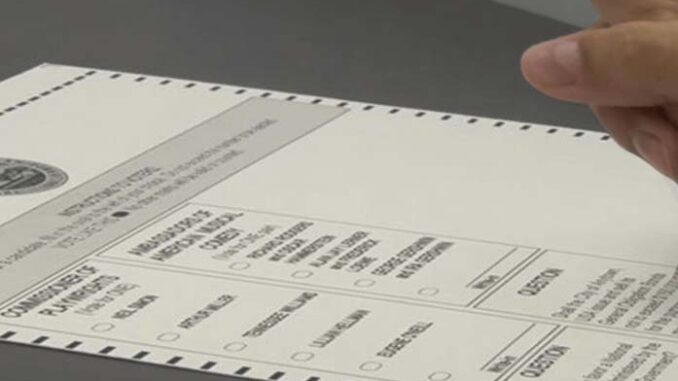
In Arizona, citizens have the power to create or repeal state statutes, and to amend the state constitution by adding, modifying, or deleting language.
In this article we provide material that could be useful for voters to determine whether to support or oppose these measures, and for those who wish to participate in the process of creating them.
First, a brief refresher of the process would be beneficial.
There are two ways to create ballot measures for citizens to vote up or down at election time, citizen initiatives and legislative referrals.
CITIZEN INITIATIVES. Any citizen, or group of citizens, may submit a measure to the Secretary of State for inclusion as a proposition on the next general election ballot. To be accepted, measures must be accompanied by the required number of valid signatures. That number varies according to the number of votes cast in the last general election for governor and whether the measure is a constitutional amendment or a statute.
It is extremely important that voters read and understand the text of the initiative before they sign the petition.
Unlike legislative referrals, citizen initiatives do not go through the rigorous process that entails committee hearings, possible amendments, and ample time for citizens to express their opinion via telephone, email, and the RTS.
LEGISLATIVE REFERRALS. The AZ legislature may place items on the ballot by introducing bills and having them go through the usual legislative process. This entails committee hearings, rules committee approval as proper and constitutional, and opportunities for voters to provide input throughout the process, culminating in a positive, simple majority vote in both chambers. When approved, these bills go directly to the Secretary of State for placement on the next general election ballot. These bills do not require the signature of the governor.
The bills that ultimately become ballot propositions are concurrent resolution bills. Their prefixes are HCR or SCR, depending on whether they originate in the House or the Senate. But not all concurrent resolution bills deal with ballot measures. A substantial portion deal with subjects that have nothing to do with ballot measures and have no legal power or significant effect on people’s lives. The only way to know for sure is to read the short title, read the text of the bill, or both.
CURRENT STATUS – CITIZEN INITIATIVES
It is still early in the game, but it is a good idea to pay attention to what is being proposed to determine whether to sign the petitions that will be circulated.
We know that there are several potential initiatives, dealing with the following subjects:
- Severe restrictions on the use of school choice ESAs (Empowering Scholarship Accounts)
- Force school choice ESA payments to be cleared through a single online marketplace
- Repeal many laws and regulations dealing with the recreational use of marijuana
- Limit compensation for healthcare executives
- Constitutionally mandate early ballots and mail-in ballots
Most likely, many more issues will be the subject of initiatives before we are done
CURRENT STATUS – LEGISLATIVE REFERRALS
Currently there are 3 referrals that will be on the November ballot for sure. They were approved by the 2025 legislature. There are also 32 pending bills this session that if passed will place additional measures on the ballot. There is no way that all 32 bills will pass both chambers, although they have all cleared their chamber of origin.
Very seldom do we see more than a small handful of these referral bills get through the process. This year we may have more than usual because of the urgency to get around Hobbs’ fascination with vetoing bills.
Regardless of the final action on these bills, we are not likely so see results for a while. Typically, action is held back until a budget is approved. For example, last year, final action did not take place until late in June, only days before adjournment. We may experience a similar scenario this year.
The three ballot measures that are already in place are as follows:
| BILL # | SHORT TITLE | WHAT THE MEASURE WOULD DO |
| HCR2021 | food; municipal tax; exemption | Prohibits taxing jurisdiction from imposing a municipal transaction privilege tax on sale of food items intended for home consumption |
| HCR2055 | drug cartels; terrorist organizations | Declares that drug cartels are terrorist organizations |
| SCR1004 | prohibit tax; monitoring; vehicle mileage | Prohibits this state and any political subdivision of this state from imposing a fee or tax based on vehicle miles traveled by a person in a motor vehicle or enacting any rule or law to monitor or limit the vehicle miles traveled |
The following chart shows all the referral bills that are still alive. Note that some of them, in their current form, have been the subject of Strike Everything amendments.
We have also put together another chart with detailed information about what the measure would do, which may be useful to those who wish to contact legislators and offer opinions.
That more thorough chart may be accessed HERE
PENDING ACTION BY THE LEGISLATURE
| BILL # | SHORT TITLE | SUBJECT |
| HCR2001 | citizenship; identification; contributions; early voting | Elections |
| HCR2003 | interscholastic; intramural athletics; biological sex | School Sports |
| HCR2004 | photo enforcement systems; prohibition. | Traffic Laws |
| HCR2005 | legislative session; adjournment | Legislature Rules |
| HCR2016 | voting centers; precinct voting | SE amended – Elections |
| HCR2016 | voting centers; precinct voting | SE amended -Elections |
| HCR2040 | NOW: school districts; labor organizations; resources | SE amended – Public Sector Labor Unions |
| HCR2044 | preferential treatment; discrimination; prohibited acts | Discrimination |
| HCR2051 | ballot measures; circulators; revenue; disclosure | Elections |
| HCR2056 | medical mandates; right to refuse | Medical Freedom |
| HCR2058 | AHCCCS; comprehensive claims audit | Fraud Prevention |
| SCR1001 | citizenship; identification; contributions; early voting. | Elections |
| SCR1002 | campaign finance; aggregate report; amount | Elections |
| SCR1003 | property tax; exemption; virtual currency | Taxes |
| SCR1004 | NOW: photo enforcement systems; voter approval | Traffic Laws |
| SCR1005 | elections; foreign contributions; prohibition | Elections |
| SCR1006 | schools; biological sex; requirements | Personal Privacy |
| SCR1012 | community college students; teachers academy (NOW compensation; independent salary commission) | SE amended – Government Agencies |
| SCR1013 | elections; foreign contributions; certification | Elections |
| SCR1014 | foreign contributions; early voting; tabulation | Elections |
| SCR1020 | compensation; elective state officers; inflation | Government Agencies |
| SCR1022 | legislature; ninety house districts | Legislature Composition |
| SCR1023 | independent redistricting commission; membership | Redistricting Rules |
| SCR1024 | legislature; district residency | Legislature Composition |
| SCR1025 | legislative sessions; opening date | Legislature Rules |
| SCR1027 | general election day; all offices | Elections |
| SCR1028 | revenue increases; administrative fee authorization | Taxes |
| SCR1029 | mine inspector; four-year term | Government Agencies |
| SCR1031 | legislative districts; population; census; citizenship | Redistricting |
| SCR1032 | educator salary increases; school reporting (NOW: instructional expenses; operational spending; enforcement) | SE amended – Education |
| SCR1040 | justices; judges; mandatory retirement age | Judiciary Rules |
| SCR1049 | death sentence; choice; firing squad | Death Penalty |