
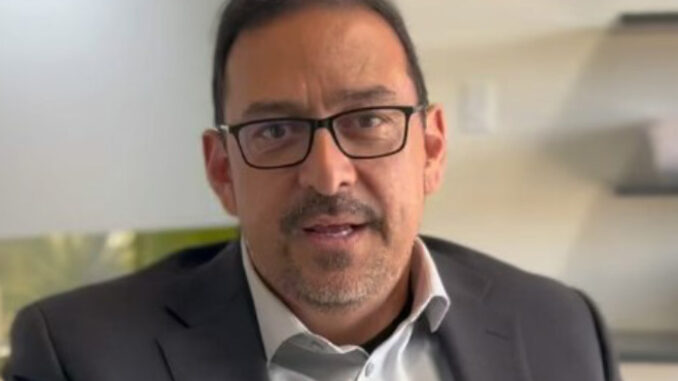
Secretary of State Adrian Fontes lost again in a court battle to all but eliminate precinct-based voting.
Once again, Pinal County emerged victorious in defending its precinct voting model from the “de facto” transition to vote centers. Fontes sought that forced change through his 2025 Elections Procedures Manual (EPM). A lower court had ruled in the county’s favor previously.
Maricopa County Superior Court Judge Scott Blaney admonished Fontes for exercising powers beyond that which were given to him explicitly in state law. Blaney said Fontes had usurped the Pinal County Board of Supervisors’ statutory authority to choose its voting location model.
“The Secretary may not require counties to adopt de facto vote centers even if there is no statute explicitly prohibiting him from regulating what ballot styles are on AVDs or under what conditions a county must count a provisional vote. The Secretary cannot accomplish indirectly what he is not permitted to do directly,” ruled Blaney.
Pinal County offers precinct-based voting, as opposed to vote centers which allow any voter in the county to vote.
Fontes’ EPM, as approved by Gov. Katie Hobbs and Attorney General Kris Mayes, would have required counties to co-opt Accessible Voting Devices (AVDs) for the use of provisional voters. AVDs were originally intended for voters with disabilities.
With that in mind, Judge Blaney ruled that Fontes’ EPM went beyond creating administrative burdens because it threatened to disenfranchise disabled voters. Blaney voided the EPM provision co-opting the use of AVDs for provisional voting.
“Even if disabled voters are not disenfranchised, these voters justifiably express frustration when non-disabled individuals use devices — like AVDs — that are specifically designed for disabled persons,” said Blaney.
Blaney rejected Fontes’ claim that precinct voting causes disenfranchisement.
“[T]he Court finds that precinct-based voting requirements do not ‘disenfranchise’ voters,” said Blaney. “Requiring a person to identify their polling place and then travel there does not deprive anyone of the right to vote — this is, in fact, a ‘usual burden of voting.’”
The conflict between Fontes and Pinal County arose shortly after Fontes took office in 2023.
Prior to that year, the EPM allowed counties with precinct-based voting to reject ballots cast by those who voted in the wrong precinct. Voters could cast provisional ballots if they insisted, but those ballots wouldn’t be counted.
Upon Fontes taking office, that changed. Fontes required counties to accept votes cast at the wrong precinct.
In 2023, Fontes modified the EPM to require counties with precinct-based voting to co-opt AVDs to provide all ballot styles so that any voter could cast a provisional ballot.
As Blaney’s ruling echoed on Friday, Pinal County argued from the beginning that co-opting AVDs would not only violate state law and create administrative burdens, but potentially disenfranchise disabled voters by taking away exclusive use of the AVDs.
Fontes has attempted to justify the change to AVD usage by claiming the EPM already required counties to transition to “de facto voting centers.”
Friday’s ruling rejected that claim, as did the Pinal County Superior Court in its October 2024 ruling.
Even with that superior court ruling last year, Fontes again tried to force precinct-based voting counties into the de facto vote center model with his 2025 draft EPM.
After Pinal County voiced their opposition to the draft, Fontes’ response was to modify the EPM to allow counties to prioritize disabled voters over provisional voters for AVD usage. The EPM maintained its requirement for counties to permit voters to cast provisional ballots from AVDs. Friday’s ruling voided that requirement.
“At some point, this stops being a disagreement over policy and starts looking like a refusal to follow the law,” said Arizona Republican Party Chair Sergio Arellano. “Adrian Fontes keeps testing the limits of his authority, and the courts keep reminding him where those limits are. The problem is, every time that happens, the people of Arizona are the ones footing the bill. Leadership means respecting the law before a judge has to enforce it—and right now, that’s the standard that’s being missed.”
Good. “Voting Centers” are a way to hopelessly muddle evidence there may be something funny going on with how many people in a given precinct allegedly voted in a certain way. It’s bad enough Arizona counties are allowed to vote other than by precinct at all. Fontes trying to force all counties to abandon precinct voting now is way over the top. The courts finally slapped him down on something? It’s a start.
Voting centers, instead of precinct polling places, were Fontes’ claim to fame as the Maricopa County Recorder. He wanted to make it state-wide for all counties even though, as the Superior Court just ruled, he didn’t have the power to do so in Pima County. I think he wanted to exert more control over Arizona voting than he should have. And that control just may be why he was elected as Arizona Secretary of State in 2022.
Why did he get elected to the state level, when he wasn’t any good at the county level? What is wrong with us?
Because og ill informed, non informed, and lay voters that do not do their homework.they blindly vote for a D label.
Lack of concern from the electorate. Most people do not know anything about the Local Representatives. Thats what makes ir so easy to do things like this sometimes unchallenged. If not for the events in the last 10 years people would not have known. Anyone with half a brain would have seen this coming with Fonted track record. This goes much deeper though and started when Helen Purcell left office and Steve Richer walked in.
To hell with that lying, bully, POS!
He’s just doing what Marc Elias is telling him to do
Democrats only follow the law when it benefits them.
Good! Anytime Fontes loses in court is a good day for Arizonans